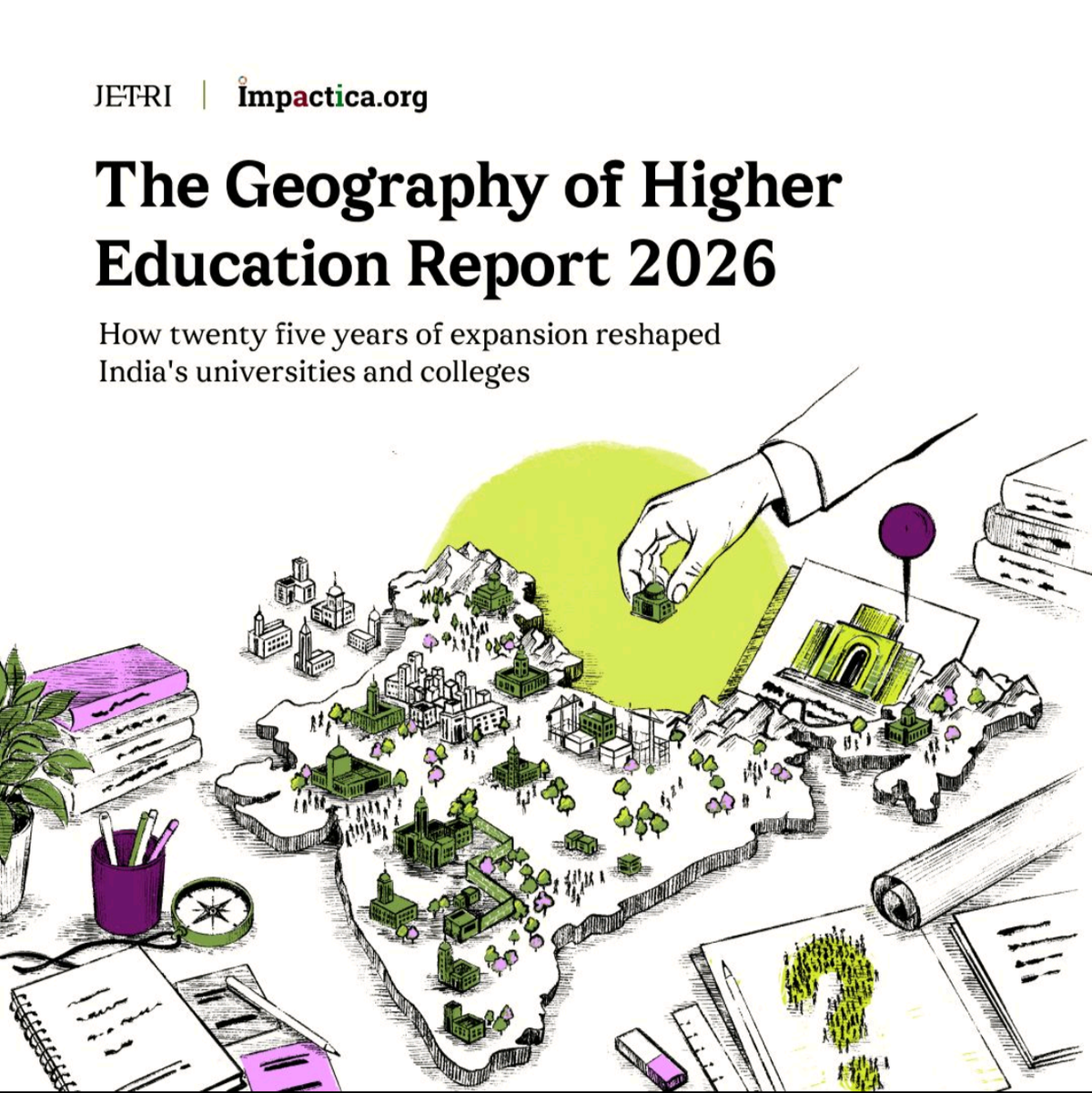
New Delhi, Sept 30 (INB) Nearly 28 per cent of India’s universities are concentrated in just 20 districts, while Bihar, Uttar Pradesh and Jharkhand face the sharpest future higher education capacity gaps, according to a report released by Jetri and Impactica.org on Wednesday.
The Geography of Higher Education Report 2026 said India’s higher education capacity was increasingly misaligned with emerging student demand, particularly as demographic and economic growth shifts towards eastern and northern states, they said in an official statement.
India currently has 1,405 universities and 53,433 colleges, with nearly 70 per cent of universities and 65 per cent of colleges established after 2001, according to the report. Seven states account for 688 universities and more than 35,000 colleges, while 28 per cent of universities are concentrated in 20 districts.
The report identified Bihar, Uttar Pradesh and Jharkhand as facing significant future capacity pressures. At current capacity levels, a university in Bihar would correspond to a future student population of approximately 10.3 lakh, compared with around 6 lakh in Uttar Pradesh. The report also found that 83 per cent of education-related migrants remain within their home state, highlighting the importance of proximity and regional access to higher education. “India has already demonstrated that it can build higher education at extraordinary scale. The next test is precision: understanding where future students will be, where capacity is weakest and where new institutions can have the greatest impact on opportunity and regional growth,” Shreyasi Singh, Managing Partner, Jetri, said. Vrunda Bansode, Founder and CEO of Impactica.org, said the focus now needed to shift from merely expanding capacity to matching it with future demand. “India can already see where the next pressure points will emerge, creating an opportunity to plan before those students arrive,” Bansode said.
The report said universities take years to build, staff and integrate with surrounding economies, making advance planning important for addressing future capacity pressures. It argued that aligning institution-building with emerging demographic centres could play an important role in ensuring wider access to higher education and enabling India to benefit from its demographic dividend.