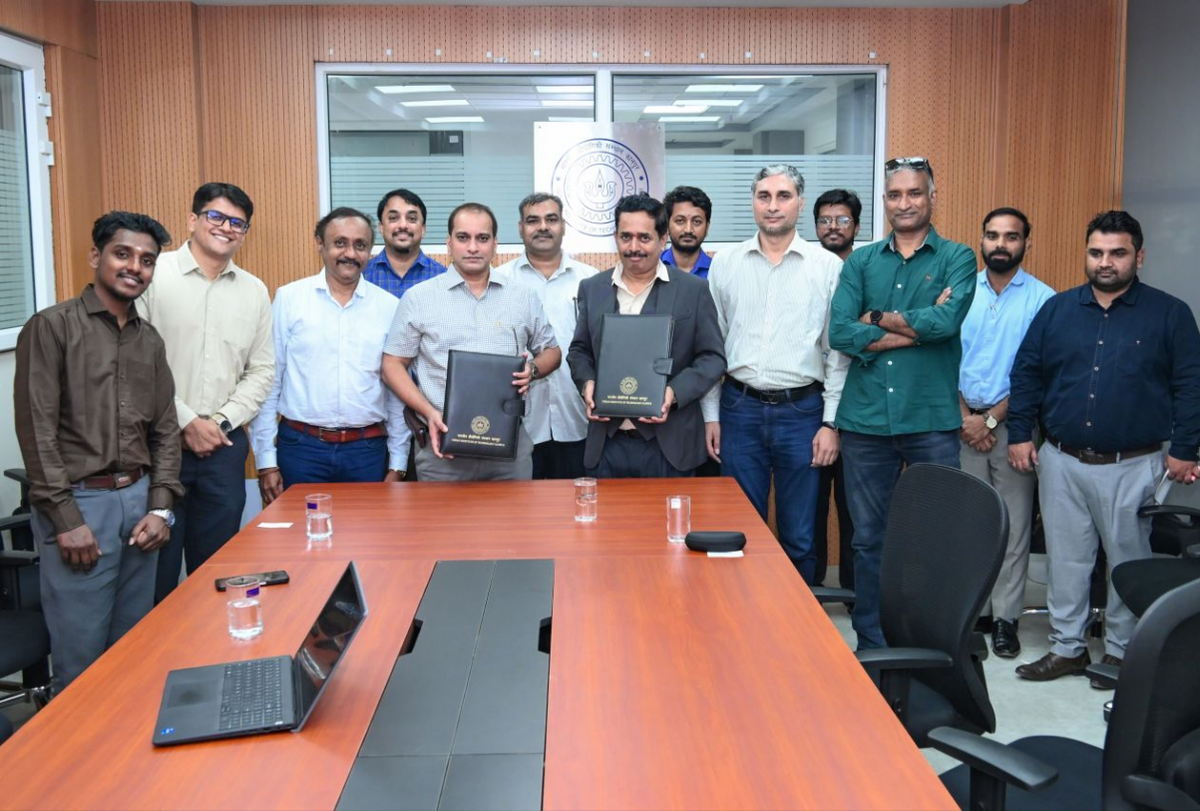
Kanpur, Oct 1 (INB) IIT Kanpur has signed an MoU with Bengaluru-based NexPV Energy Systems to develop what the institute described as India’s first Sun Simulator for Concentrated Photovoltaic (CPV) systems, it said.
The project, facilitated by Invariance Automation, a member company of IIT Kanpur’s Research and Technology Park Foundation (Technopark@IITK), will enable CPV modules to be tested and characterised at the end of production lines in India, the institute said in a statement on Wednesday. The project is being led by Professor Ashish Garg and his team from IIT Kanpur’s Department of Sustainable Energy Engineering and is aimed at creating domestic testing infrastructure for next-generation solar technology. “Testing infrastructure is a strategic part of that chain: a technology cannot scale if it cannot be measured reliably,” Garg said, adding that CPV modules behave differently from conventional flat-plate solar panels, it added.
CPV systems use optical lenses to concentrate sunlight onto multi-junction solar cells, which contain multiple semiconductor layers designed to capture different parts of the solar spectrum. According to IIT Kanpur, the cells occupy about 0.1 per cent of the panel area, significantly reducing cell requirements compared with conventional solar panels. NexPV, led by Chidananda Murthy R, has developed indigenous CPV technology, with its proof-of-concept systems operating in the field for around three years, the company said. It is now moving towards large-scale manufacturing. “CPV needs less than one per cent of the cell area of a conventional panel and, in our systems, about half the land. It can open a new pathway for solar in India’s high-DNI regions,” Murthy said. Unlike conventional sun simulators designed for flat-plate panels, CPV modules require direct and parallel sunlight, accept light within a narrow angle and are sensitive to spectral balance. The IIT Kanpur team will design the simulator to reproduce these conditions, the institute said. Invariance Automation will serve as the preferred manufacturing partner for taking the system from prototype to production in the future, according to the statement. The project is part of IIT Kanpur’s efforts to develop clean-energy technologies and strengthen industry-academia partnerships around indigenous innovation, the institute said.