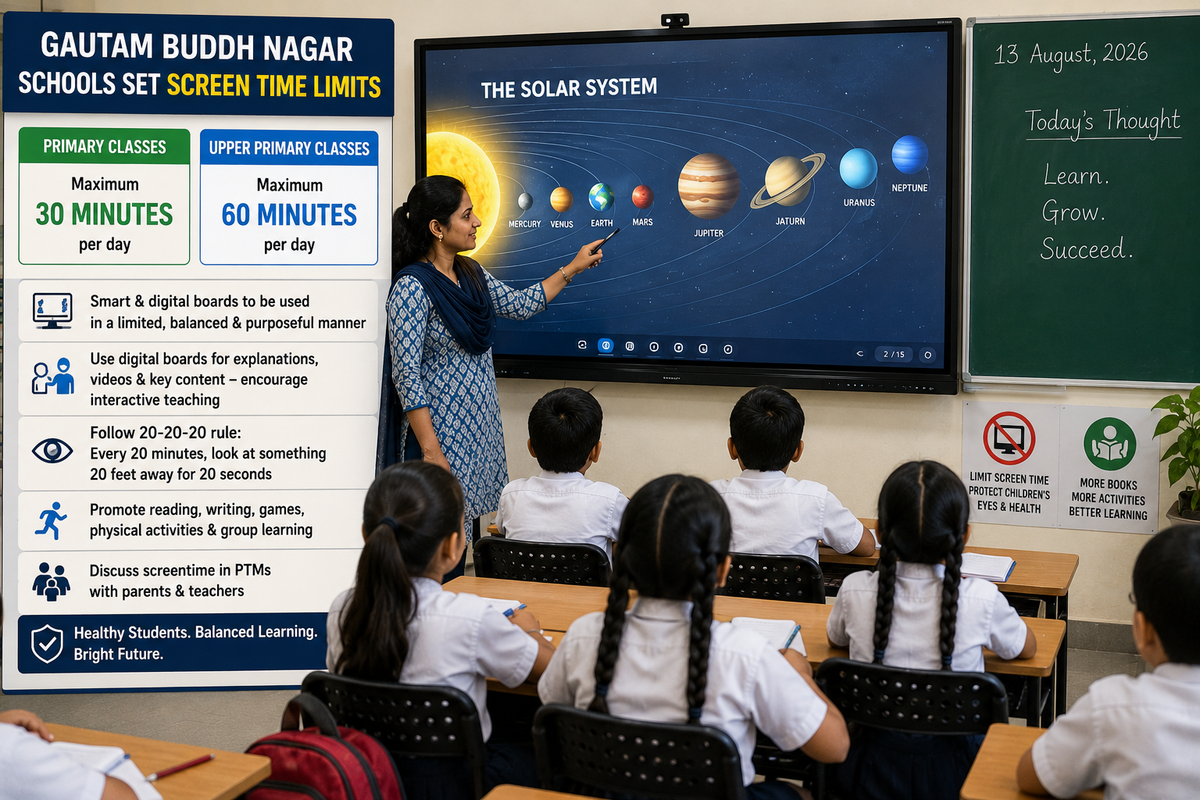
Noida, Aug 14 (INB) Schools in Gautam Buddh Nagar, including Noida and Greater Noida, have been directed to limit students’ use of smart and digital boards to a maximum of 30 minutes a day in primary classes and 60 minutes in upper-primary classes, according to an official order. The decision follows complaints about excessive classroom screen exposure, the district administration said in a statement. The directions were issued by the district administration after parents’ associations raised concerns that students in several schools were spending four to five hours daily in front of screens during teaching, classwork, question-answer sessions and homework, according to the statement issued on Thursday. The district administration said prolonged screen exposure could contribute to eye fatigue, short-sightedness, headaches, reduced concentration and other physical and behavioural problems among students. The District Magistrate directed government, aided and private schools to ensure that smart and digital boards are used in a limited, balanced and purposeful manner and as a supplementary teaching tool rather than as a replacement for conventional classroom teaching. Schools have been advised to use digital boards mainly for explaining difficult concepts and displaying relevant images, videos and other teaching material. Blackboards, whiteboards or greenboards should be used regularly for writing, practice, question-answer sessions and other participatory activities, the release said. The administration also directed schools to ensure appropriate screen brightness and classroom lighting and maintain a suitable distance between students and screens. Schools have been asked to provide breaks after about 20 minutes of screen use and promote activity-based learning, reading, writing, sports, group activities and physical exercise, according to the release. The administration cited age-appropriate screen-use recommendations issued by national and international bodies, including NCERT, the World Health Organisation, Indian Psychiatric Society and Indian Academy of Pediatrics. It also referred to the 20-20-20 practice, under which students should look at an object at least 20 feet away for 20 seconds after every 20 minutes of screen use. Schools have further been directed to inform parents if students show symptoms such as eye irritation, headaches or blurred vision and seek medical advice where necessary. Quarterly eye examinations of students and sharing of reports with parents have also been emphasised. The district administration has asked school management committees to discuss the guidelines and share the minutes of their meetings with parents during parent-teacher meetings (PTMs). Screen-free periods, “digital zero days” and “digital detox” activities have also been encouraged. Nominated magistrates and nodal officers will monitor compliance in the schools allotted to them and submit reports through the District Inspector of Schools, Noida, the release said.