New Delhi, Sept 22 (INB) Warwick university reasearchers have identified a sensory nerve channel that detects warm temperatures as a potential direct switch for chronic pain signals, a finding that could point to new treatment approaches, the university said on Tuesday.
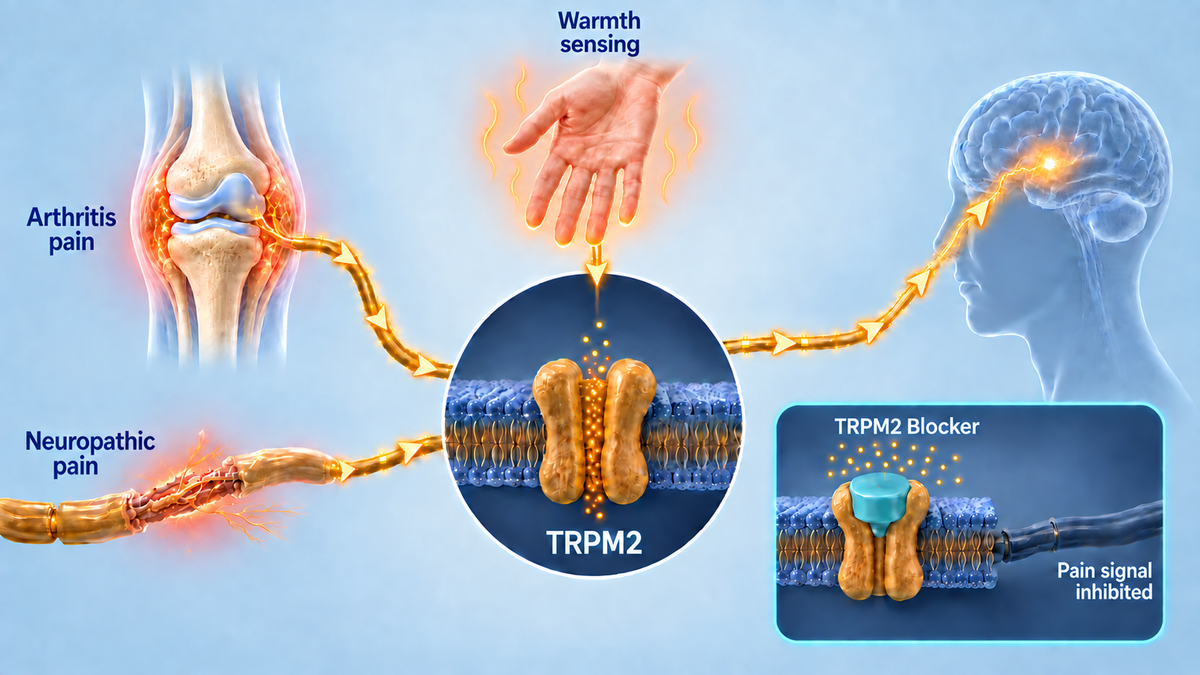
Scientists from the university’s School of Life Sciences found that TRPM2, previously known mainly as a sensor for mild, non-painful warmth, can also act as a pain generator in sensory nerves, according to the research published in the Proceedings of the National Academy of Sciences (PNAS). The researchers found that prostaglandin E2, a chemical released during inflammation, and autoantibodies can act directly on TRPM2 to activate pain signals in nerve cells, the university said in an official statement. Lead author Dr Xuming Zhang said the findings suggest TRPM2 acts as a “convergent pain switch”, converting different immune and inflammatory signals into electrical impulses interpreted by the brain as pain. In mouse models, removing TRPM2 from nerve cells prevented pain caused by prostaglandin E2 and autoantibodies and substantially reduced chronic arthritis and nerve injury pain, according to the researchers. The study also found that blocking TRPM2 with a drug injected into the joint completely reversed arthritis pain in mice. The pain relief lasted for two days after a single dose, without suppressing the underlying joint inflammation, it added. The researchers said the findings indicate that TRPM2 may provide a separate pathway for pain that operates alongside inflammation, potentially offering an alternative target for chronic pain treatment, it stated. Founded in 1965, the University of Warwick is a research and education institution in the UK, with a focus on interdisciplinary research, innovation and collaboration across academic and industry partners. Its School of Life Sciences conducts research spanning areas including biomedical sciences and human health, it added. The university said its research ecosystem brings together staff, students and collaborators through interdisciplinary programmes and specialist facilities, with research aimed at addressing challenges in areas such as healthcare, technology and society. The Warwick team plans to investigate how TRPM2, a protein involved in detecting harmless warmth, can also drive persistent pain and whether different populations of TRPM2-carrying nerve cells perform the two functions, it stated.